Understanding CPA, CPL, and CPS in Affiliate Marketing
If you have just been entered to the affiliate marketing arena, then you might have stumbled across the concepts of CPA, CPL, or CPS. In starting, everything looks complicated, but these commission structures are the basis on which affiliates make money online. It is helpful to know their differences so you can select the campaigns that you want to run, optimise conversions, and maximise your earnings.
-
 June 02, 2026
As a blogger, influencer, media buyer or content creator, understanding how each payment structure works is the key. A website such as Leadyon Australia offers a whole range of offers for CPA, CPL and CPS, which makes it easier to locate campaigns that fit with specific traffic sources and marketing strategies.
Here we will discuss briefly the various models and how they can be used in an affiliate marketing program, and which one you should choose for your own program.
What is CPA (Cost per Action)?
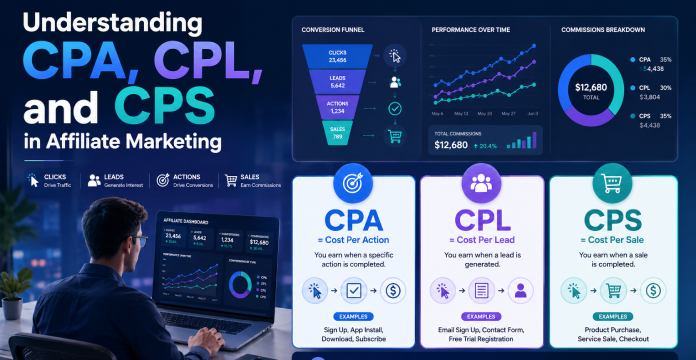
CPA (Cost Per Action) is a commission agreement that pays to affiliates when a user takes a certain action. The user does not have to buy anything from the program, and it is not a sales-based program.
Typical CPA activities include:
- Signing up for a newsletter
- Signing up to use the site.
- Downloading an app
- Starting a free trial
- Completing a form
For instance, if an advertiser is willing to pay $5 for an individual registration, and 100 users register via your affiliate link, you’ll make $500.
Why Affiliates Like CPA
CPA marketing is a popular way to do business because conversions are generally easier to produce. No cost to the users increases the chances of their taking the desired action. This is why CPA campaigns are an excellent choice for those new to affiliate marketing who want to earn their first affiliate commissions.
But advertisers want real and quality traffic. Invalid or fraudulent actions can result in rejected commissions.
What is CPL (Cost Per Lead)?
CPL (Cost Per Lead) is a lead-generating commission basis. Affiliates have the opportunity to make money when users provide some of their contact details or show interest in a service.
The lead will contain information including:
- Name
- Email address
- Phone number
- Business information
- Service enquiry
An industry that heavily depends on leads before converting prospects into customers is the finance, education, insurance, real estate, and SaaS sectors, and they make use of CPL campaigns.
Benefits of CPL Marketing
The one thing that makes CPL campaigns so great is that users don’t have to make a purchase. This typically leads to better conversion rates than sales-focused offers. CPL can offer a consistent and regular income to affiliates who have targeted traffic.
The secret to a successful campaign is a well-qualified lead. Affiliates should drive relevant traffic to their sites to appeal to the advertisers and not just for the sake of volume.
What is CPS (Cost Per Sale)?
The most popular affiliate marketing program is the CPS program, which means Cost Per Sale. Only affiliates who successfully bring customers into the system to make a purchase will receive a commission.
An example is if the product is $200 and the commission rate is 10%, the affiliate will receive $20 per sale.
CPS, unlike CPA or CPL, requires the user to invest funds prior to earning a commission. This means that it may take longer to convert, but a better payout can result.
Why CPS is Still Popular
Those who have not been around for too long and have experience in affiliate marketing choose CPS campaigns due to higher earning potential. For sales-based offers, you can make a lot of money by writing a product review, a comparison article, a buying guide, and SEO content.
There is more trust involved in getting sales than there is in getting products, and there’s more persuading involved, but the long-term benefits can be great, particularly for high-ticket items and subscription products.
CPA vs CPL vs CPS: What is the Best?
It’s difficult to say without knowing your customers and marketing approach.
CPA:
For the beginner, CPA is the best choice since the conversions are usually easier.
CPL:
CPL is suitable for marketers focused on lead generation and those in service-based businesses.
CPS:
For affiliates that have great content, purchase-intent traffic, and a long-term growth strategy, it is the best choice.
Note: However, many successful affiliates use all three models to diversify their income and minimise reliance on a single model.
Reasons to Work with a Trustworthy Affiliate Marketing Network?
Selecting the right offers and the right affiliate network is just as crucial. A good affiliate marketing network offers accurate tracking, prompt payments, support and quality advertisers.
If you don’t have these in place, scaling affiliate campaigns becomes a lot harder.
How Leadyon Australia Supports Affiliates
Leadyon Australia enables affiliates to reach trusted advertisers in various industries. The Leadyon Affiliate Network offers publishers campaigns such as CPA, CPL, and CPS with clear reporting, accurate tracking, and even support from the affiliate team.
From lead generation to action-driven campaigns and everything in between, Leadyon offers opportunities to suit various promotional strategies and audience types, all focused on boosting online sales.
Frequently Asked Questions
1. What is CPA in Affiliate Marketing?
CPA is the Cost Per Action model, where for a click, the affiliate receives a commission for completing a certain action, for example, a registration or a download.
2. What is CPL Affiliate Marketing?
CPL is Cost Per Lead, which means the affiliate is paid for the number of leads that they are able to create using forms or inquiries and are qualified leads.
3. How does CPS work?
In the CPS system, a referred customer purchases something, and they earn commission from CPS.
4. Which is the Ideal Model for Beginners?
For beginners, CPA is the simplest of the various models, as users don’t have to purchase to earn a commission.
5. Why Join the Leadyon Affiliate Network?
Leadyon Affiliate Network offers access to quality affiliate campaigns, a reliable tracking system, accurate reporting and affiliate opportunity expansion in several verticals.
In The End:
Any serious affiliate marketer should know what CPA, CPL and CPS are. Every network has its pros and cons, and the right one will depend on your traffic source, audience action and earning objectives.
The difference between them can be summarised as follows: CPA is targeted at actions, CPL is geared towards lead generation, and CPS is designed to be paid for when sales are completed. With a reliable platform such as Leadyon Australia, affiliates can create a more effective affiliate marketing program.
Social Share:


Domain Smith
Finanappreciate your trust greatly Our clients choose dentace ducts because know we are the best area Awaitingare really.